The Cairn
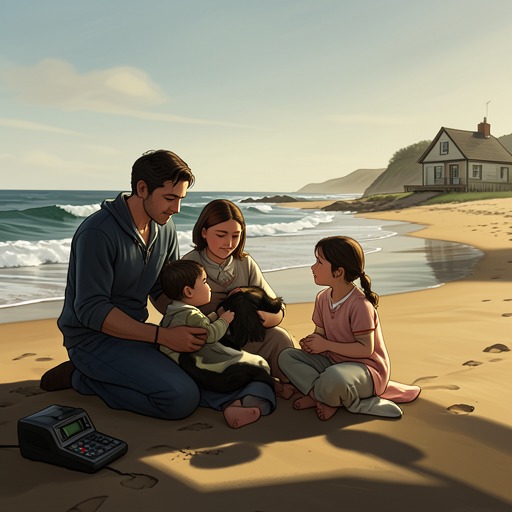
The Summer BookThe Cairn is a long, remote skerry at the outer edge of the Gulf of Finland, reached only on a rare day of exceptional calm. Its smooth granite ridges, scattered round boulders, and exposed shores give the place a spare, almost sculptural character. During a family outing, that stark landscape becomes a space for separate paths: Sophia and her Papa explore the shore while Grandmother slips away to find a quiet place of her own.
Setting and Formation
A small motorboat rarely ventures to The Cairn because the journey takes hours and requires provisions for the whole day. From a distance, the skerry appears to be two islands: a pair of smooth, seal-like granite spines, one marked by a channel marker and the other by a small beacon. A narrow neck of perfectly rounded boulders joins the spines. Despite its name, there is no cairn on the island.
The island’s shape is especially legible from the water. As the boat draws nearer, the apparent pair resolves into granite ridges connected by the boulder-strewn neck. The distinction between its sides matters less on the day of the visit: with the sea unusually calm, every shore offers shelter, and the family lands at the first available spot.
A Rare Landing
The sea is smooth and pale on the family’s visit, calm enough to make the difficult trip possible. Grandmother sits in the boat beneath a violet parasol, a colour she dislikes but finds unexpectedly pretty against the water. The family carries its supplies ashore and puts the butter in the shade; the granite is hot underfoot.
Sophia’s Papa wedges the parasol handle into a crack so Grandmother can rest on an air mattress. She watches the others set off in opposite directions until they become small figures along the water’s edge. Rather than stay where they expect her to be, she arranges sweaters and bathrobes on the mattress to suggest that she is asleep, takes her walking stick, and heads away alone. The island’s scale gives her room to disappear from the family’s view without leaving the shared excursion.
Shoreline Solitude and Exploration
Grandmother finds a small canyon cut through the rock and opening into the sea. Even at midday, its bottom lies in shadow, which continues down into the water and out beyond the shore. She lowers herself into the canyon a little at a time, settles at its bottom, lights a cigarette, and watches the barely visible swell. From this enclosed pocket of darkness, she sees Sophia return from swimming as a narrow shadow against the sun.
The Cairn’s channel marker offers a different encounter with the island’s height and exposure. It is a white wall of widely spaced horizontal planks with a red triangle at its centre. The gaps are so broad that Sophia can barely reach from one plank to the next. She climbs slowly, pausing until her shaking knees steady, and gets almost to the top before Grandmother notices. Grandmother resists the impulse to shout, understanding that startling the child could make the climb dangerous; instead, she encourages Sophia as she takes another step.
Narrative Significance
The Cairn’s remoteness is not simply a barrier. The long journey and the need to carry food make a visit an undertaking, while the broad, calm sea briefly turns an otherwise difficult route into an accessible one. Once ashore, the island accommodates both company and withdrawal: the family spreads out along the water, and Grandmother finds a secluded canyon within the same landscape.
Its contrasting features shape the episode’s movement. Open granite and hot shore give way to the canyon’s cool shadow; the quiet of Grandmother’s retreat sits beside Sophia’s exposed, painstaking ascent. The island is therefore more than a distant destination: its varied terrain makes space for solitude, observation, and a moment in which care means allowing a frightened child to continue without startling her.